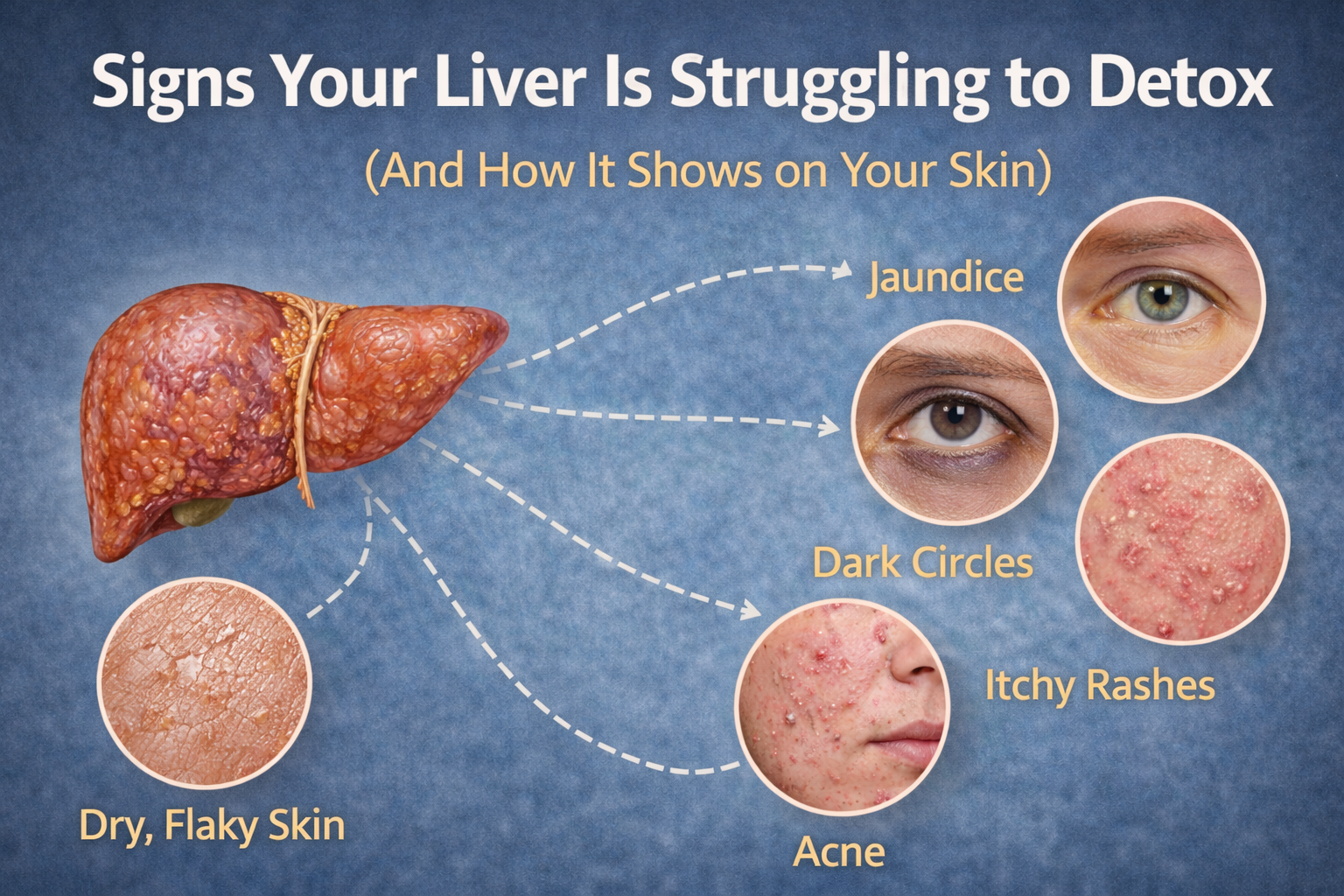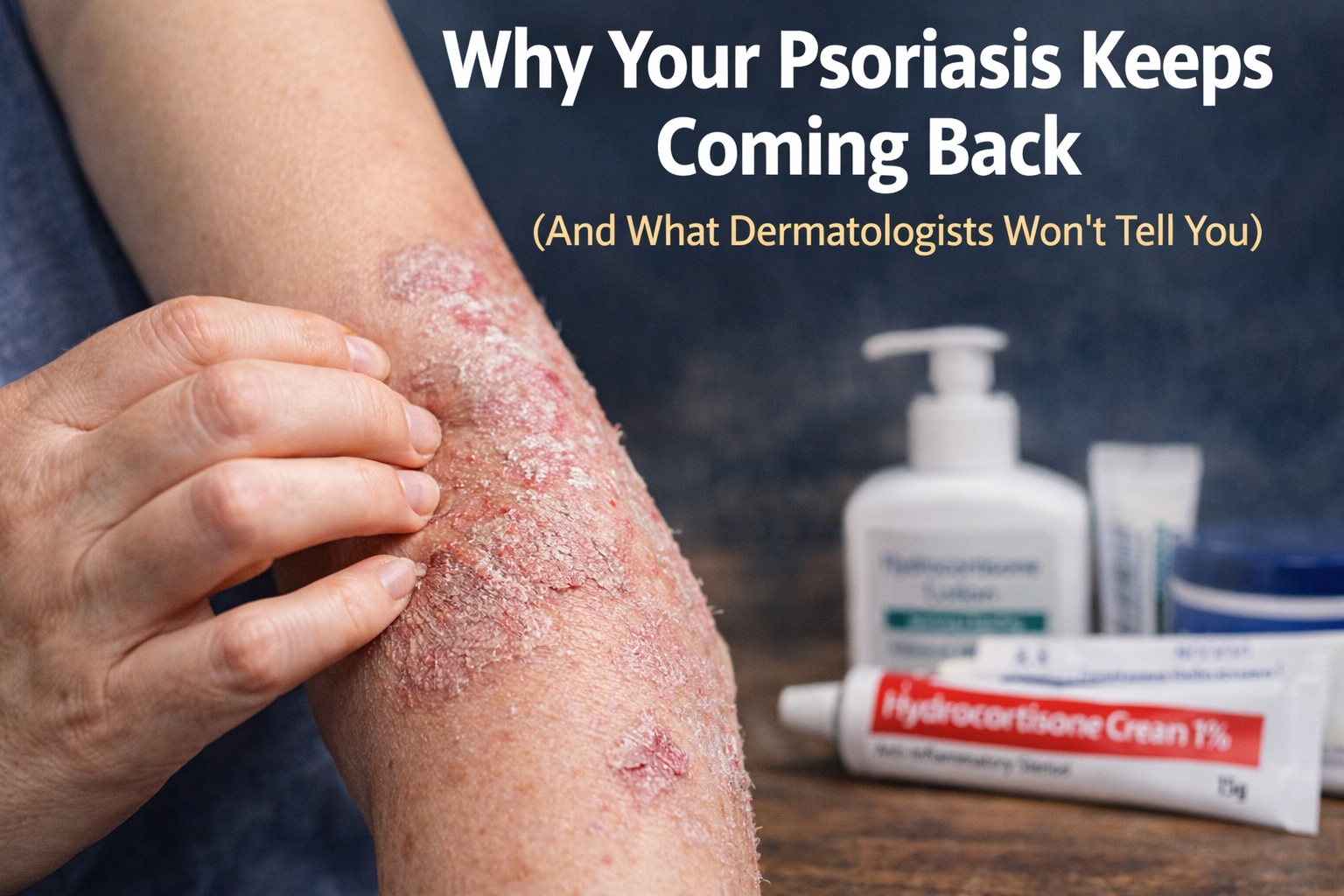
Ask most people what bile does and they'll say it helps digest fat. That's true — but it's only half the story. Bile is also your body's primary toxin elimination vehicle. Every day, your liver packages fat-soluble toxins, excess hormones, and metabolic waste into bile and ships it to the intestines for elimination. When that system breaks down, the consequences are profound — and they show up on your skin.
What Is Bile and Why Does It Matter?
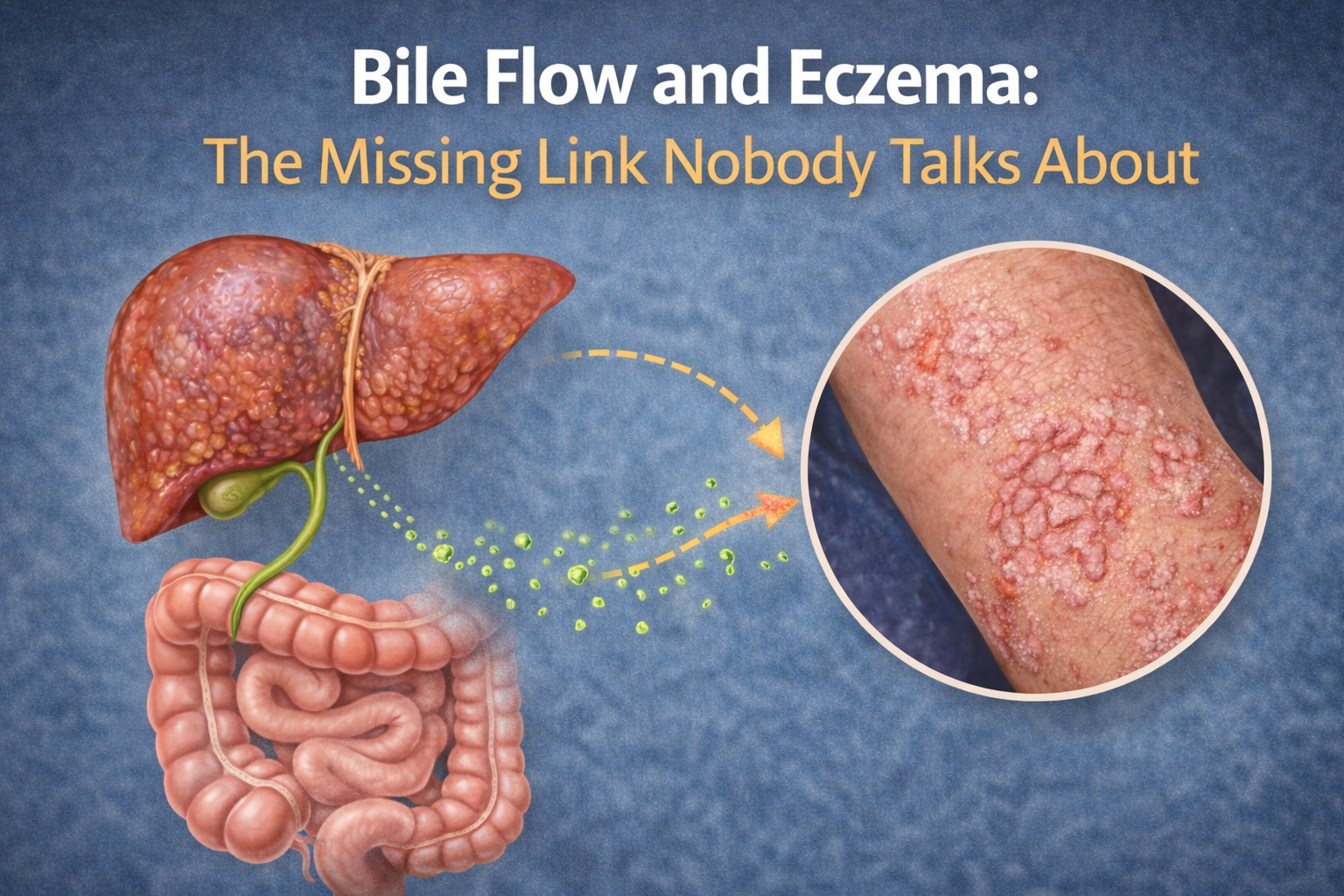
Bile is a complex fluid produced by the liver and stored in the gallbladder. It contains bile acids, cholesterol, bilirubin, phospholipids, and a range of toxins bound for elimination. When you eat a meal containing fat, the gallbladder contracts and releases bile into the small intestine, where it emulsifies fats for absorption and carries toxins toward the colon for excretion.
Healthy bile is thin, fluid, and flows freely. Unhealthy bile — caused by poor diet, dehydration, liver stress, or genetic factors — becomes thick, sludgy, and stagnant. This is called biliary sludge, and it's far more common than most people realize.
How Sluggish Bile Drives Eczema
Toxin Recirculation
When bile flow is sluggish, toxins that should be eliminated get reabsorbed in the intestines and recirculate in the bloodstream. This is called enterohepatic recirculation of toxins. The immune system detects these circulating toxins and mounts an inflammatory response — which in eczema-prone individuals manifests as the characteristic itching, redness, and weeping skin lesions.
Fat-Soluble Vitamin Deficiency
Adequate bile flow is essential for absorbing fat-soluble vitamins A, D, E, and K. Vitamin D deficiency is strongly associated with eczema severity — multiple studies show that eczema patients have significantly lower vitamin D levels than healthy controls. If your bile flow is impaired, you may be deficient in these critical skin-supporting nutrients even if you're supplementing them.
Clinical Observation: Many eczema patients who have had their gallbladder removed report significant worsening of their skin condition post-surgery. Without a gallbladder to store and concentrate bile, bile flow becomes continuous and dilute — impairing both fat digestion and toxin elimination.
Signs Your Bile Flow Is Impaired
- Pale, clay-colored, or floating stools (fat malabsorption)
- Nausea or discomfort after eating fatty foods
- Right shoulder or upper right abdominal pain
- Chronic fatigue and brain fog
- Eczema, psoriasis, or rosacea that worsens after high-fat meals
- History of gallstones or gallbladder removal
- Dry skin and poor fat-soluble vitamin absorption
The Best Supplements for Bile Flow
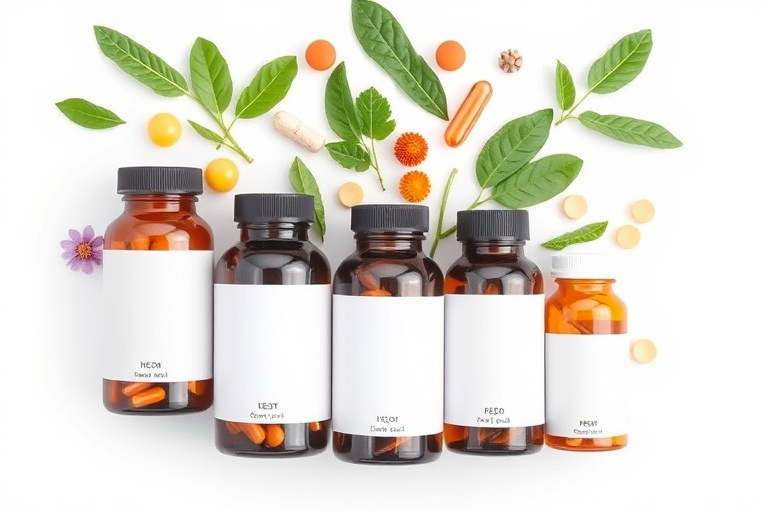
- TUDCA (Tauroursodeoxycholic Acid) — the most clinically studied bile acid, directly thins bile and improves flow
- Ox Bile Extract — supplemental bile salts that replace deficient bile acids, especially important post-gallbladder removal
- Phosphatidylcholine — the primary component of bile, improves bile composition and reduces sludge
- Dandelion Root — traditional herb that stimulates bile production and liver drainage
- Artichoke Extract — increases bile production and improves bile flow velocity
Bile flow is one of the most overlooked factors in chronic skin conditions. If you've tried everything for your eczema and nothing has worked, this is the area to investigate. Start with TUDCA and phosphatidylcholine, and give it 6-8 weeks to see results.